Sunday, August 9, 2026

The Psychology of Casual Dating: Why So Many People Are Choosing Low-Commitment Connections


Somewhere along the way, casual dating stopped being the thing people did quietly and started being, well, just dating for a lot of folks. And once you look at the psychology underneath it, that shift makes a ton of sense. People gravitate toward low-commitment connections because those arrangements actually satisfy real needs: the desire to feel independent, the thrill of meeting someone new, less pressure hanging over every text, and the freedom to get to know a person without slapping a label on it by date three. This isn't some passing trend either. It's tied to bigger changes in how we think about relationships, time, and what we owe to ourselves versus other people.

So let's get into what's really going on here. The social forces, the attachment stuff, the lifestyle piece, and what a genuinely good casual dating experience actually looks like when it's done right.

Table of Contents


  • What Is Casual Dating, and Why Has It Become So Popular?
  • The Psychology of Casual Dating: What Really Draws People In
  • How Attachment Styles Shape Casual Dating Preferences
  • Autonomy, Freedom, and the Modern Lifestyle Factor
  • Casual Dating vs. Traditional Relationships: A Side-by-Side Comparison
  • How Technology and Dating Apps Fuel the Casual Dating Boom
  • Common Psychological Misconceptions About Casual Dating
  • How to Approach Casual Dating in a Healthy, Fulfilling Way
  • FAQ: Casual Dating and Psychology

Casual dating is a relationship style where two or more people connect romantically or sexually without the expectations of exclusivity, long-term planning, or the formal labels that come with a traditional relationship. It's caught on because it fits the pace of modern life. People still want connection. They just don't always want to bolt the weight of a "serious relationship" onto every single date.

The reasons run deeper than "people are commitment-phobic now," which is the lazy explanation you hear all the time. Careers demand more mobility than they did a generation ago. And the numbers back this up: the median age of first marriage in the United States has climbed to roughly 30 for men and 28 for women, according to U.S. Census Bureau data. That's a pretty loud signal that people are pushing back the traditional milestones. But pushing them back doesn't mean people stopped wanting romance or physical closeness. It means they're looking for something that doesn't require them to hit pause on their own lives. Casual dating slots right into that gap. Company, intimacy, fun, minus the five-year plan.

That's also why platforms built specifically for this exist. There's real demand for spaces where singles, couples, and LGBTQ+ folks can meet people who are straight-up about wanting something low-pressure. A site like Flirtup lets you sign up, browse profiles, and chat with real singles and couples in your area who are also keeping things casual, which cuts out that agonizing guessing game of "wait, are we looking for the same thing here or not?"

The Psychology of Casual Dating: What Really Draws People In

At its core, the psychology of casual dating comes down to a trade-off: people accept less obligation in exchange for more control over their emotional and physical lives. There's not just one thing driving it, though. Several psychological gears are turning at once, and once you see them, the appeal stops being mysterious.

The Appeal of Novelty and Variety

Our brains are basically suckers for novelty. Meeting someone new, that first-date energy, the early spark of attraction, all of it lights up the reward pathways in your brain, the same way any new experience triggers a hit of dopamine. Casual dating lets people chase that feeling again and again instead of settling into the (perfectly nice, but predictable) rhythm of one long-term partner. And I'll say this because it gets missed a lot: for plenty of people this isn't about dodging depth. They just genuinely like the discovery part. The getting-to-know-you part is the point.
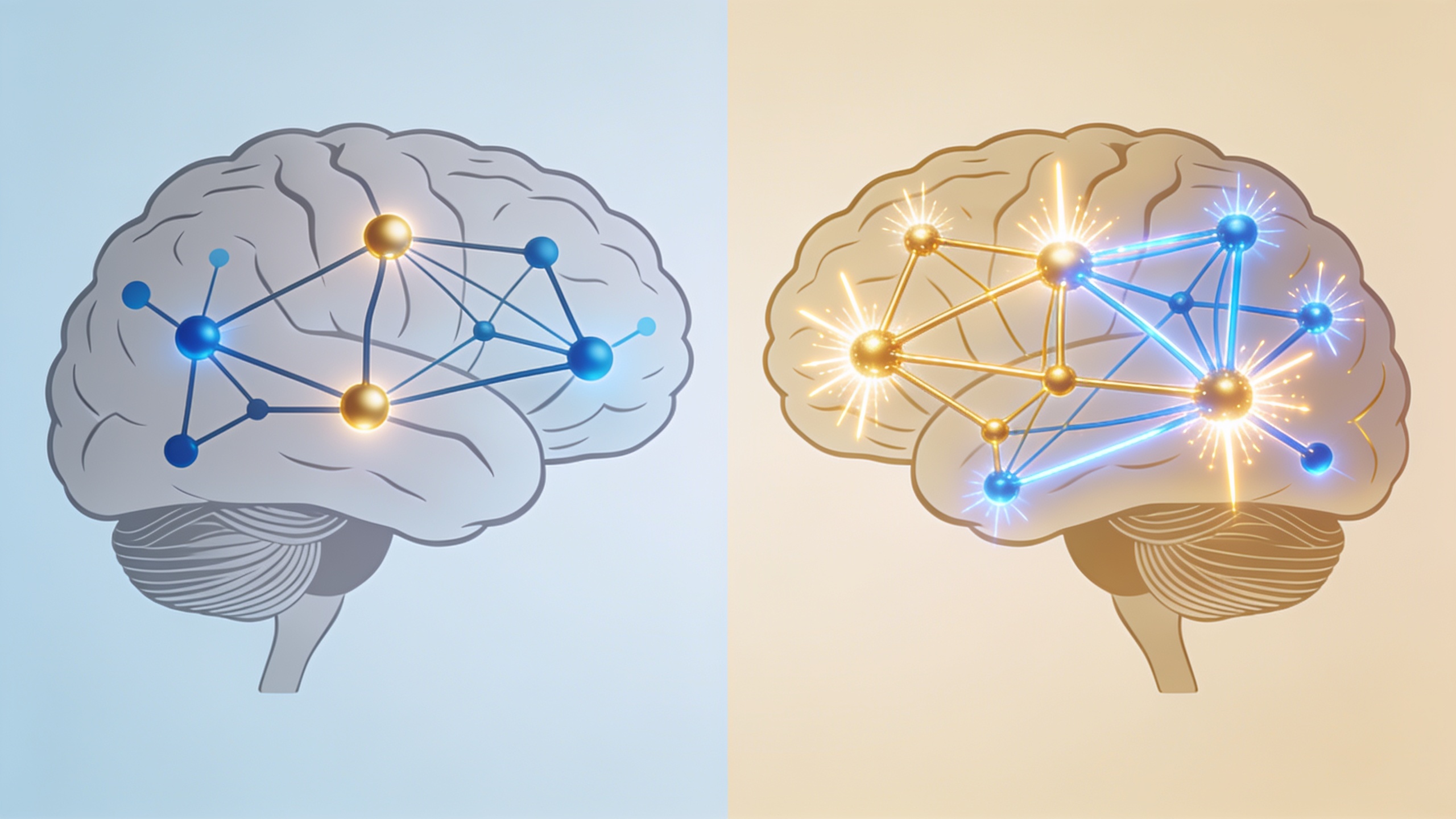
Brain illustration comparing dopamine response between casual dating novelty and long-term relationship predictability

Lower Emotional Risk, Higher Perceived Safety

Committed relationships come loaded with stakes. Vulnerability, dependency, the very real possibility of getting your heart flattened when it ends. Casual dating dials that way down. Because everyone's expectations are clearer and lower from the jump, a lot of people feel psychologically safer in casual dynamics. You get to enjoy the closeness while insulating yourself from the deeper gut-punch that comes with a serious relationship falling apart. Is that a little self-protective? Sure. But so is everyone, in one way or another.

Self-Discovery and Identity Exploration

Dating casually gives you room to figure out what you actually want, in a partner, in bed, in the whole shape of a relationship, without staking everything on one high-pressure decision. This matters a lot for younger adults who are still working out their relationship identity. It also matters, maybe even more, for people coming out of a long marriage who suddenly have to rediscover their own preferences after years of being half of a "we." Couples exploring non-traditional dynamics feel this too, and so do LGBTQ+ folks who want a space where they don't have to explain themselves from scratch. That freedom to just explore? People bring it up constantly.

How Attachment Styles Shape Casual Dating Preferences

Your attachment style, meaning the pattern of relating to others you developed early in life and lug around into adulthood, plays a real and measurable role in who's drawn to casual dating and how they experience it. Attachment theory came out of developmental psychology and sorts people into broad styles like secure, anxious, and avoidant. Each one bumps up against low-commitment dating a little differently.

People leaning avoidant often find casual dating downright comfortable, because it keeps the emotional closeness and interdependence, the stuff that can feel suffocating to them, at a manageable distance. They get connection on their own terms. Meanwhile, plenty of securely attached people enjoy casual dating too, just for a totally different reason: they're confident and don't feel rattled by ambiguity. They don't need constant reassurance to feel fine about where things stand. Anxiously attached folks tend to have the roughest time with it, since not knowing where a partner's head is at can crank up real distress for this group. That's a pattern widely cited across relationship psychology literature.

The point here isn't that casual dating "belongs" to one attachment type. It's that everybody drags their existing wiring into these situations, and knowing your own wiring is usually what decides whether the whole thing feels freeing and fun or just anxious and confusing. Self-awareness does a lot of heavy lifting.

Autonomy, Freedom, and the Modern Lifestyle Factor

Autonomy, the basic psychological need to feel in charge of your own time and choices, is probably the single biggest engine behind why casual dating is having such a moment. Life right now is busier, more mobile, and more individually focused than it was for our parents, and casual dating lines up with that reality way better than old-school courtship timelines ever could.

Careers involve relocation, remote work, schedules that make no sense. A lot of people just don't want to build their personal life around somebody else's five-year plan while they're still constructing their own. Casual dating lets you keep your friendships, your ambitions, your hobbies, your goals, and still have romance and physical connection on the side. Frequent travelers especially get this. If you're booking a spontaneous weekend trip through something like Global Holiday Planner, you're probably not looking to build a shared future with someone waiting back home. You might just want company and fun without the weight of long-distance obligation coloring every decision.

You can hear this in how people talk about their ideal pace, too. Instead of moving in together after a few months or arranging life around a partner's calendar, a lot of casual daters want to keep their schedules (and their sense of self) mostly their own. That's not the same as being incapable of intimacy. It's that they've decided independence is non-negotiable, at least for this chapter. And "at least for this chapter" is doing a lot of quiet work in that sentence.

Casual Dating vs. Traditional Relationships: A Side-by-Side Comparison

Casual dating and traditional committed relationships diverge across a bunch of practical and emotional dimensions, and laying them out side by side makes it easier to see why people pick one path over the other at different points in their lives.

FactorCasual DatingTraditional Relationship
Level of commitmentLow to flexible, often undefinedHigh, usually exclusive
Communication expectationsOngoing but lower-pressureFrequent, often daily
Emotional investmentLighter, though can deepen over timeDeep and expected to grow
Future planningRarely discussed early onOften central to the relationship
Freedom/autonomyHigh — partners maintain independent livesLower — schedules and decisions are shared
Best suited forPeople prioritizing flexibility, exploration, or funPeople seeking long-term partnership and stability
Common concernsMismatched expectations, less emotional securityLoss of independence, higher stakes if it ends

Neither one is inherently "better," despite what your most opinionated friend might insist. They just serve different psychological needs at different stages. Somebody rebuilding their confidence after a divorce might crave the low pressure of casual dating, while somebody actively trying to start a family will probably want the stability of a committed one. The thing that actually matters in both cases is alignment, whether what you genuinely want matches the structure you've chosen. Because honestly? It's the mismatches that cause the pain, not the structure itself.

How Technology and Dating Apps Fuel the Casual Dating Boom

Dating apps have made casual dating more accessible, more socially normal, and way easier to find than at any point in modern history. Technology didn't invent the urge for low-commitment connection, obviously. It just knocked down a lot of the logistical and social walls that used to make it a pain.

Think about how this worked before apps. Finding someone open to something casual meant relying on your social circle, bars, or dumb luck, and every one of those carried a decent risk of mismatched expectations or a genuinely awkward misfire. Purpose-built platforms flipped that by letting people state what they want upfront. On Flirtup, for instance, users pick their identity and what they're after, including options for individuals, couples, and transgender users, before they ever message anyone. That filters out a huge chunk of the guesswork that used to make casual dating so clumsy to navigate. And this is all pretty mainstream now: according to Pew Research Center's research on dating app usage, a substantial share of U.S. adults have used a dating site or app at some point, which tells you how normal digital dating has become across basically every age group.

The wider tech world around these platforms has grown up, too. The same way dating apps lean on smart matching to connect compatible profiles, other industries lean on similar automation. Tools like RobinRank use AI to help businesses manage content and visibility at scale, which is really the same underlying trend playing out somewhere else: tech is increasingly doing the grunt work of connecting the right people with the right thing, whether that "thing" is a date or a piece of content you're searching for. That broad comfort with algorithm-driven discovery is a big reason people now trust an app to handle introductions that used to only happen through friends or blind chance.

Common Psychological Misconceptions About Casual Dating

Casual dating gets misread constantly, so let's clear up a few of the stubborn myths, because the psychology behind it is a lot more layered than the stereotypes let on.

"Casual Dating Means Avoiding Commitment Forever"

Most people dating casually aren't rejecting commitment. They're rejecting premature commitment, which is a very different thing. Casual dating can be a phase, a preference for one specific season of life, or just where someone's comfort level sits right now. Some casual connections quietly grow into something serious. Others stay exactly as casual as intended. And here's the part people miss: both of those count as success in a casual mindset, because escalation was never the promised destination.

"People Who Prefer Casual Dating Are Emotionally Unavailable"

Attachment style plays a role, yeah, but preferring casual dating does not automatically mean someone can't bond. Loads of emotionally healthy, self-aware people choose it simply because it fits where their life is at, a brutal career stretch, a recent move, or a stretch of wanting to focus on themselves before tangling their life up with someone else's. That's not avoidance. That's just decent self-knowledge.

"Casual Dating Is Only About Physical Connection"

Physical attraction is often part of the picture, sure. But conversation, laughter, real companionship, and actual emotional connection matter just as much to a lot of people using these platforms. Couples exploring non-traditional dynamics, for example, are usually after shared experiences and genuine chemistry, not some stripped-down physical encounter with zero personal spark. Reducing all of it to sex misses most of what's actually happening.

How to Approach Casual Dating in a Healthy, Fulfilling Way

The best casual dating experiences come from clear communication, honest self-awareness, and realistic expectations set early. They don't come from dodging the awkward conversations about what everyone actually wants. Casual doesn't mean careless, and weirdly enough, satisfying low-commitment connections lean pretty heavily on clarity.

Start by being honest with yourself before you ever start chatting with matches. Are you after fun and variety? A way to meet people while your schedule stays loose? A low-stakes way to explore what you like? Once you know, say it plainly to the people you meet instead of hoping they'll just intuit it. On a platform like Flirtup, where you specify your identity and what you're looking for, whether that's a man, woman, couple, or transgender partner, that clarity is baked into the sign-up process itself, so a lot of the early guesswork is already handled.
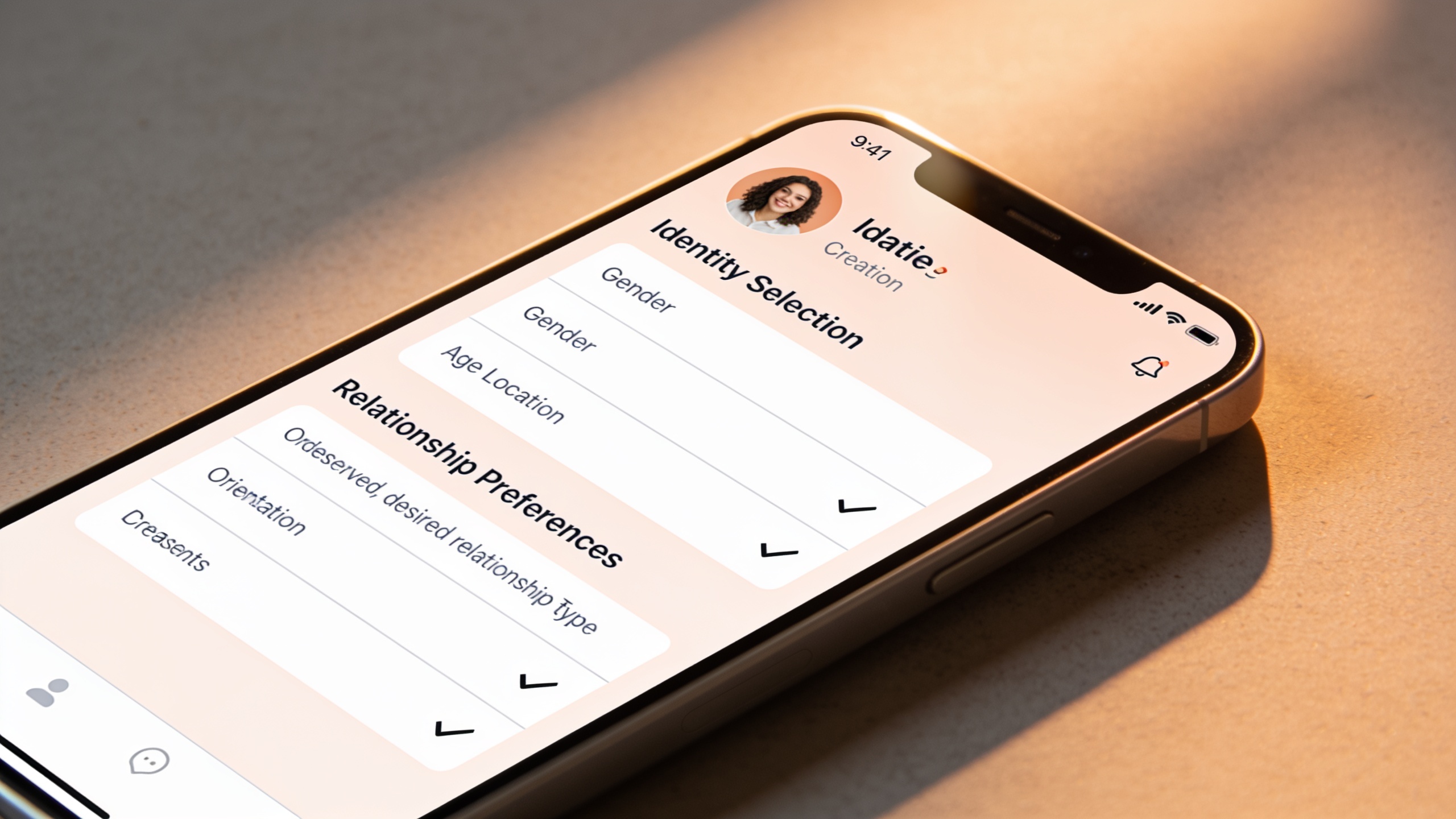
Dating app interface showing clear profile setup with identity and preference options for transparent communication

Check in with yourself now and then, too. Feelings can shift even inside a casual setup, and psychological research on relationship satisfaction consistently shows that regular, honest communication cuts down on misunderstandings no matter how a relationship is structured. If a casual thing starts wanting to become something more, for you or for them, just say so. Naming it out loud beats letting mismatched expectations pile up silently in the corner until they explode.

And respect boundaries, including your own. Casual dating works best when everyone treats each other with the same basic consideration they'd want anywhere else: honesty about intentions, respect for people's time, a little kindness when things naturally fizzle out. That mutual respect is usually the whole difference between a good casual experience and one that leaves somebody feeling used or confused. It's not complicated. It's just easy to skip when you tell yourself "it's only casual."

FAQ: Casual Dating and Psychology

Is casual dating actually healthy, psychologically speaking?
For a lot of people, yeah. It can support autonomy, self-discovery, and social connection without the weight of long-term commitment, as long as both people are honest about their intentions and keep tabs on their own feelings. The trouble usually doesn't come from the casual structure itself. It comes from mismatched expectations or nobody communicating.

Why are so many people choosing casual dating over serious relationships right now?
A pile of things at once: later marriage ages, busier careers, more mobility, and a stronger cultural emphasis on personal autonomy. People increasingly want connection and intimacy without hitting pause on their independence, and casual dating happens to fit both at the same time.

Can casual dating turn into a serious relationship?
It can, and it does for some couples. But it's not guaranteed, and it shouldn't be treated as the "real goal" secretly hiding under every casual connection. Some casual relationships stay exactly as casual as intended, and that's a perfectly valid ending, not a failed one.

Does your attachment style change how you experience casual dating?
Definitely. More avoidant people tend to feel comfortable with the reduced closeness casual dating offers, while more anxious people often struggle with the ambiguity. Knowing your own patterns can make the whole thing feel a lot less stressful.

How do I know if casual dating is right for me?
It tends to suit people who value flexibility, are heads-down on personal or career goals, or just aren't ready for the depth of something committed right now. If you notice yourself craving more structure, exclusivity, or long-term planning, that's a decent sign a traditional relationship might be a better fit for you. And realizing that about yourself is completely normal, at any age.

Casual dating's rise really isn't a mystery once you look at what's underneath it. It's a pretty logical response to busier lives, later milestones, and a culture that puts a higher premium on personal freedom than it used to. Whether you're brand new to it or you've been dating this way for years, the healthiest version always circles back to the same simple idea: know what you want, say it plainly, and give people the same respect you'd want back.

🔥 Looking for casual dating near you? 💕 Meet new people, chat, and make real connections today! 📍

👉 Tap the link to get started and see who's nearby! ❤️

Sponsored | Affiliate Link 🔗


Tuesday, August 4, 2026

8 Dating App Red Flags to Watch for on Any Dating App

8 Dating App Red Flags to Watch for on Any Dating App

Dating apps are how most single people meet these days. They're also where scammers and manipulators go fishing, and business is good. Learning to spot the classic warning signs, the little tells that a match isn't who they claim to be (or just doesn't have your best interests at heart), is honestly one of the easiest ways to protect your heart, your bank account, and your personal info all at once. Doesn't matter if you're just looking for something fun and low-key or hoping for something real. The same red flags keep popping up either way.

So here's what I want to walk you through: eight of the most common ones, why they matter, and what to actually do when you spot them. I'll also get into how often this stuff really happens, because the numbers are worse than most people think.

Table of Contents


  • What Are Dating App Red Flags, and Why Do They Matter?
  • Red Flag #1: Profile Photos That Look Too Polished
  • Red Flag #2: They Rush the Relationship (Love Bombing)
  • Red Flag #3: They Refuse to Video Chat or Meet in Person
  • Red Flag #4: Money Requests, No Matter How Small
  • Red Flag #5: Inconsistent Stories and Details
  • Red Flag #6: Pressure to Move Off the App Immediately
  • Red Flag #7: Explicit or Aggressive Messaging Right Away
  • Red Flag #8: They Avoid Verification or Safety Features
  • How Common Are Online Dating Scams?
  • How to Protect Yourself From Dating App Red Flags
  • FAQ: Dating App Red Flags

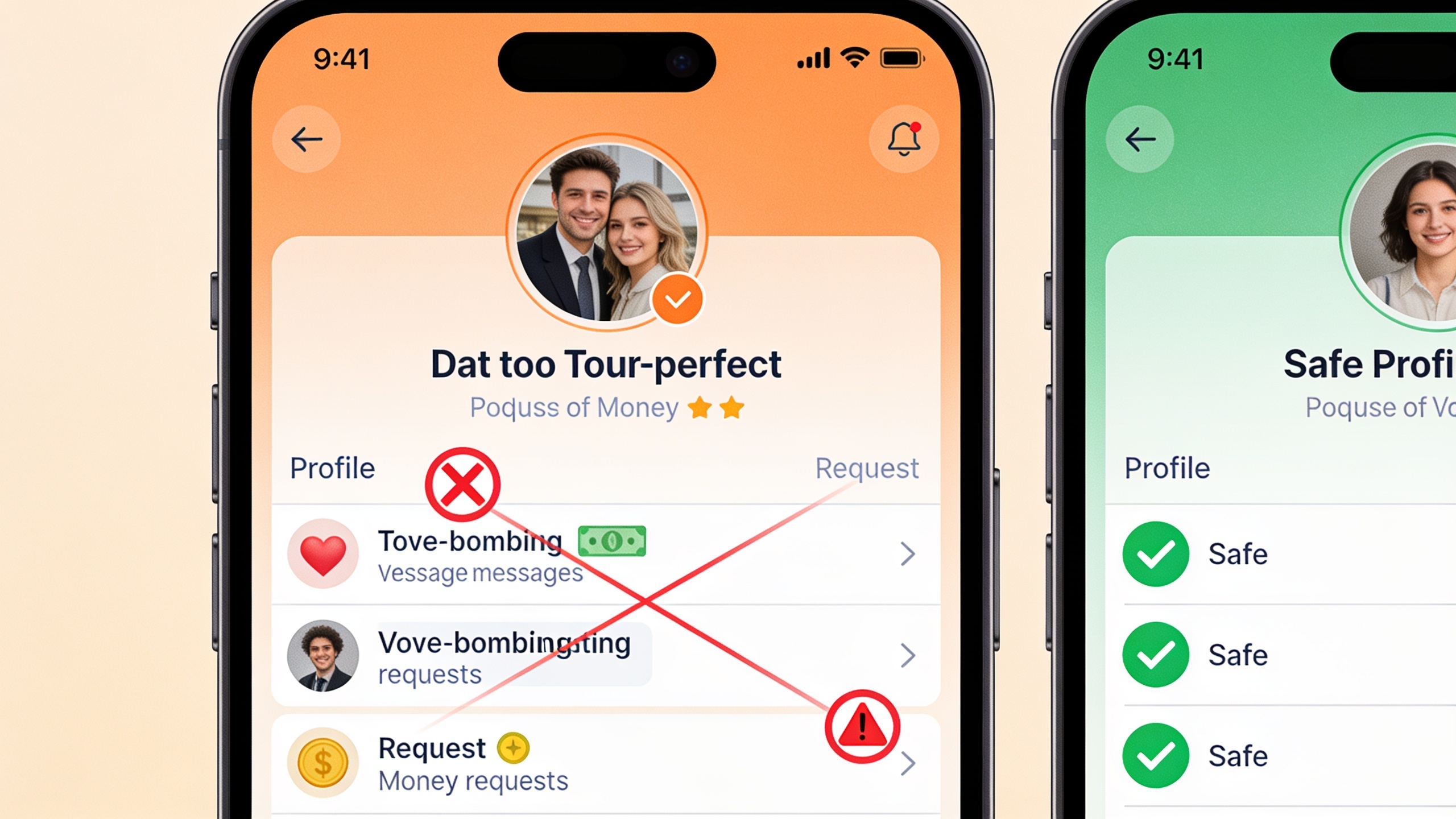
Person practicing safe dating app habits by verifying profiles and consulting with a friend before engaging

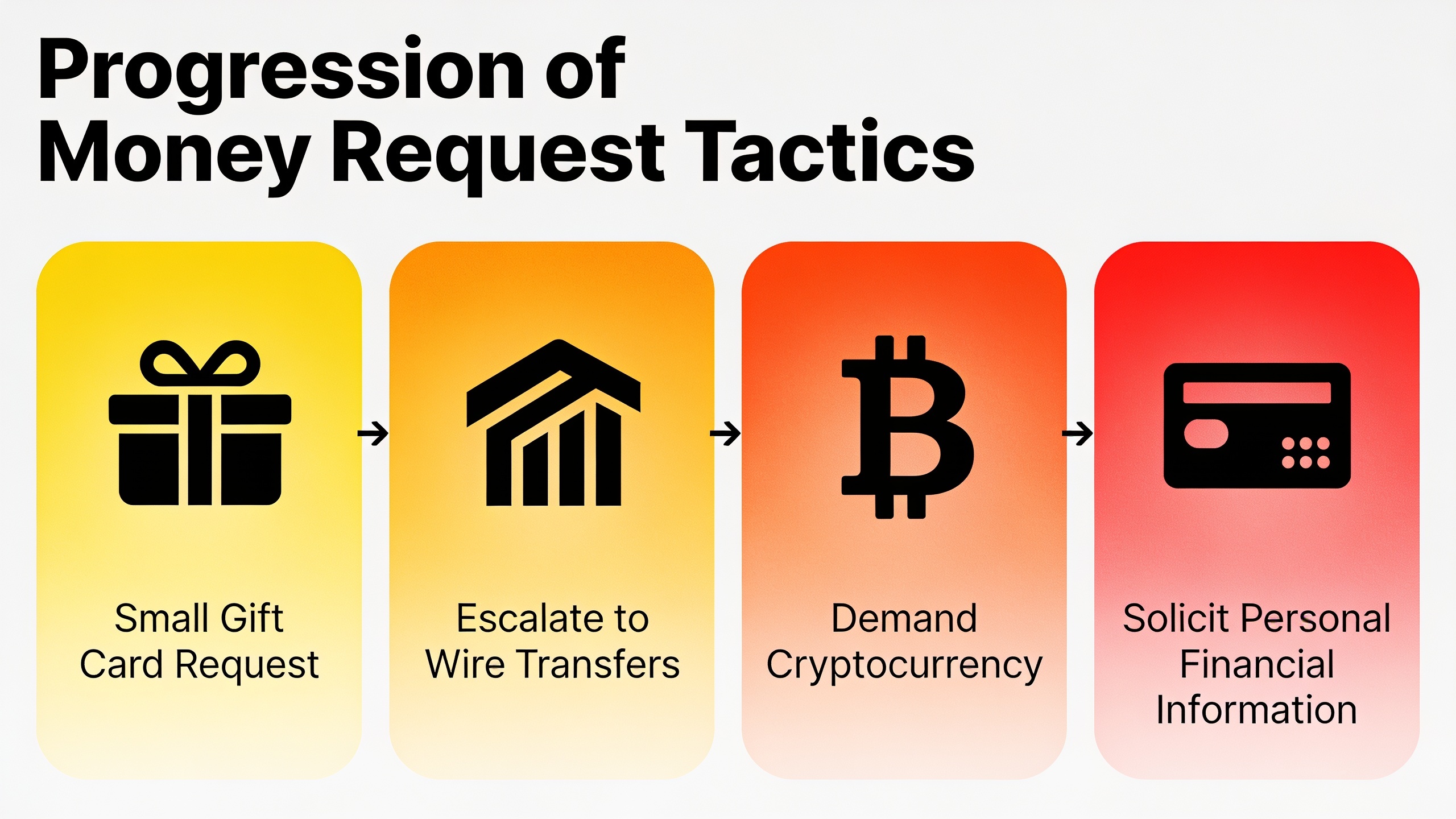
Infographic showing escalation pattern of financial scam requests from small to large amounts

What Are Dating App Red Flags, and Why Do They Matter?

Dating app red flags are behaviors, patterns, or inconsistencies in someone's profile or messages that point to deception, manipulation, or a flat-out scam instead of real romantic interest. They matter because they're usually the only warning you get before you've sunk emotional energy, personal details, or actual money into someone who turns out to be fake.

And I want to be clear about something: a red flag is a pattern, not a single weird moment. One slightly generic photo doesn't make someone a con artist. One awkward text doesn't either. But a photo that looks like a stock image, plus a rushed "I love you," plus a request for gift cards? Yeah. That's not a coincidence. The goal here isn't to turn into a paranoid mess who screenshots every match for forensic analysis. It's to recognize the combinations that keep showing up in scams, so you can back out early before things get messy.

Casual platforms like Flirtup, which cater to singles, couples, and LGBTQ+ users who want low-pressure connections and quick chatting with people nearby, are exactly the kind of fast-moving environment where this matters most. The quicker things move, the more useful it is to have a mental checklist running in the background.

Red Flag #1: Profile Photos That Look Too Polished

If every single photo on a profile looks like it was pulled from a magazine spread, that deserves a second look. Scammers grab images from modeling portfolios, influencer accounts, or just random strangers, because they need attractive photos that hook people fast.

What tips me off? Photos that are all clearly professional, with zero casual or candid shots. Nobody's real life looks like a photoshoot. I also watch for lighting and backgrounds that jump around wildly from one pic to the next, like they were scraped from a bunch of different sources instead of taken by the same person over a few years. A quick reverse-image search on one or two photos can be weirdly revealing. Sometimes the same face pops up under a completely different name on some random website.

Oh, and here's a newer wrinkle. Some scammers now use AI to crank out flattering bios that mirror your interests a little too perfectly. That's a totally different thing from legit businesses using purpose-built tools like RobinRank to automate their SEO content and marketing copy. The tech isn't the villain. But when a stranger's bio reads like it was reverse-engineered to make you swoon in the first ten seconds, that's your cue to slow down, not speed up.

Red Flag #2: They Rush the Relationship (Love Bombing)

Love bombing is when someone drowns you in affection, compliments, and declarations of love way earlier than makes any sense, specifically to build trust fast and get your guard down. On a casual app, it sounds like "I've never connected with anyone like this" or "I think you're my soulmate" within days of matching. Sometimes hours.

It works because, well, it feels amazing. Everybody wants to be told they're special, and a good manipulator knows exactly which button that is. The warning sign isn't the affection itself. It's the speed and intensity compared to how little this person actually knows about you. Somebody who doesn't even know your last name has no business talking about your future together.

Getting to know someone at a healthy pace, even a casual one, usually looks like a slow back-and-forth. Inside jokes, questions about your day, some flirting that builds up over time. When all that gets replaced by a fire hose of adoration, it's fair to stop and wonder what the hurry is.

Red Flag #3: They Refuse to Video Chat or Meet in Person

A match who keeps dodging video calls or meetups after weeks of texting is one of the clearest red flags out there. Real people, even shy ones, even busy ones, will generally agree to a quick video call or a coffee within a reasonable window once things feel comfortable. Scammers can't do that. A live video would instantly blow their cover, because they don't look like their photos and their story falls apart in real time.

The excuses tend to rhyme. A "broken camera" that somehow never gets fixed. A job that conveniently keeps them overseas or on a ship for months. A run of last-minute cancellations right before you're supposed to meet. One excuse is life. A repeating pattern of excuses over several weeks is a pattern, and patterns tell the truth.

If you've been chatting for a couple weeks and every single nudge toward video or meeting up gets deflected, just ask directly why. And if they get squirmy about it? That squirm is your answer.

Red Flag #4: Money Requests, No Matter How Small

Any request for money, gift cards, crypto, or financial information from someone you've only met online is basically the most reliable scam predictor there is. Full stop. It doesn't matter how small the ask is or how heartbreaking the story sounds. A stranded relative, a customs fee to "release a package," a sudden medical emergency, an investment opportunity they just have to let you in on. It's all the same play.

Scammers usually start small on purpose, to see if you'll bite. Then they escalate once you've shown you're willing to help. In the crypto world there's even a nickname for it, "pig butchering," where the scammer spends weeks or months fattening up the relationship before rolling out a fake investment platform and pushing bigger and bigger transfers.

Request TypeCommon Cover StoryWhy It's a Red Flag
Gift cards"I need to pay a customs fee to visit you"Untraceable, instant, and non-refundable
Wire transfer"My account is frozen and I need help"Cannot be reversed once sent
Cryptocurrency"Let me show you how I made money trading"Often linked to fake investment platforms
Personal financial info"I want to send you something, just need your details"Can enable identity theft, not just theft of funds
Small "test" loan"It's embarrassing, but can you cover this small amount?"Testing your willingness before asking for more

The rule is dead simple: never send money, crypto, or financial details to anyone you haven't met in person and independently verified. Doesn't matter how long you've been talking or how convincing the sob story is.

Red Flag #5: Inconsistent Stories and Details

Little contradictions in someone's story are a strong sign you're dealing with a made-up persona instead of a real person. A job that quietly changes. An age that doesn't line up with something they said last week. A hometown that shifts between conversations. Look, genuine people forget small stuff sometimes, that's human. But a pattern of contradictions about the big things (where they live, what they do, how many kids they have) means the story itself is fiction.

One trick I like: casually bring up something they told you earlier and see if the answer matches. If a match says they run a business, spend five minutes on whatever site or page they mention. Real small businesses tend to invest in a coherent, professional presence, the kind of thing agencies like Digital Fusion Hub build for people. A scammer's "business" site is usually slapped together with stock photos, dead links, and no real contact info. If the story behind their story can't survive a five-minute Google, that's telling you something.

Red Flag #6: Pressure to Move Off the App Immediately

A match who pushes hard to jump to WhatsApp, Telegram, email, or their personal number within the first message or two is running a classic scam move. Dating apps have safety features, reporting tools, and moderation. Scammers hate all of that. Getting you onto an unmonitored channel as fast as possible is priority number one for them.

Now, exchanging numbers eventually is totally normal. Once you've traded a few good conversations and there's some trust, sure, go for it. The red flag is the urgency. When it happens before you've even had a real exchange, or when they get weirdly insistent even after you've said you'd rather wait, that's the tell.

Hanging around inside the platform's messaging a little longer than you might elsewhere isn't being uptight. It's just letting the safety tools do their thing before you decide someone's worth taking off-platform.

Red Flag #7: Explicit or Aggressive Messaging Right Away

Even on casual apps where flirting and sexual conversation are completely normal and expected, there's a huge gap between mutual, consensual flirtation and someone barreling through your cues. If a match fires off explicit content, or demands it from you, within minutes of matching and without any sign you wanted things to go there, that's a boundary problem worth taking seriously.

Sometimes this bleeds into "sextortion," where someone talks you into sharing explicit photos and then threatens to leak them unless you pay up. Other times it's just a person who fundamentally doesn't respect consent or pacing, which is its own reason to bail, scam or not.

On a platform built around casual, flirty connections, being open to that kind of conversation is part of the fun. But you set the pace. A match who steamrolls right past your comfort level in the first few messages is basically showing you a preview of how they'll handle your boundaries down the line. Believe the preview.

Red Flag #8: They Avoid Verification or Safety Features

A match who refuses to use any of a platform's verification or safety features, or gets defensive the second you ask, deserves extra scrutiny. Lots of dating platforms build these tools in specifically to help separate real people from scammers, and someone with nothing to hide generally doesn't mind using them.

This is also where a platform's own transparency comes into play. Flirtup, for instance, is upfront that it requires users to confirm they're over 18 and to accept its terms, privacy policy, and cookie policy before signing up, and it discloses that account and match-related emails go out through the DatingFactory.com network. That kind of plain, no-nonsense disclosure is what you should expect from a legit platform. It's also a handy yardstick for measuring how transparent your individual matches are being back at you.

So if someone dodges every safety question you throw out, "why won't you verify your account," "can we do a quick video before we swap numbers," treat the dodging itself as the information you needed.

How Common Are Online Dating Scams?

Common enough that most people on dating apps will run into at least one attempted scam eventually, even though not every slightly-off match is a criminal. Pew Research Center has found that roughly three in ten U.S. adults have used a dating site or app at some point, and that sheer scale is exactly what makes these platforms such a juicy target for fraud.

The financial damage is genuinely staggering. The Federal Trade Commission has reported that romance scams cost U.S. consumers over $1 billion in a single recent year, based on complaints filed through its Consumer Sentinel Network. And remember, that's only the reported losses. The real number is almost certainly way higher, because plenty of victims never file anything out of embarrassment or just not knowing where to go. Federal agencies have specifically flagged crypto-related romance scams as one of the fastest-growing categories, usually the slow-burn kind where the scammer spends weeks cultivating a relationship before floating a bogus "investment opportunity."

None of this means dating apps are some kind of danger zone. Millions of people use them every single day and meet actual, wonderful humans. It just means a basic awareness of the common tricks cuts your risk in a real way. Same logic as any business that wants to be found online investing in the fundamentals, like the tailored SEO and content work agencies such as Digital Fusion Hub handle. A little effort upfront saves you a lot of grief later.

How to Protect Yourself From Dating App Red Flags

The best defense is a mix of healthy skepticism, a couple of verification habits, and the willingness to trust your gut when something feels rushed or off. And no, this doesn't require becoming a bitter cynic about dating. It's just a few small habits worth baking into how you use any app.

Slow the pace down on purpose. If a conversation feels like it's sprinting ahead of the actual relationship, notice that instead of ignoring it, especially when it comes packaged with early "I love yous" or urgent asks.

Verify before you trust. A reverse image search, a quick video call, a peek at any linked social or business profiles. All of that can confirm someone's real in a matter of minutes.

Keep money completely off the table. There is no legitimate reason for someone you met on a dating app to need cash, gift cards, or your banking info before you've met in person and built real trust. None. Ever.

Two more that people skip and shouldn't:

  • Talk to a friend about it. Saying the situation out loud to someone else has a magical way of surfacing red flags you couldn't see while you were caught up in it.
  • Report and move on. If a match trips two or more of these flags, report the profile and disengage. There's no version of a genuine connection that requires you to override your own discomfort.

And honestly, staying inside the platform a little longer than feels strictly necessary is smart too. The reporting tools and moderation exist to protect you, and sticking around gives you more runway to catch inconsistencies a pushy match is hoping you'll miss.

FAQ: Dating App Red Flags

What's the single biggest red flag on a dating app?
Any request for money, gift cards, or financial info from someone you haven't met in person. It's widely considered the clearest warning sign because it's the tactic most directly tied to financial scams, as opposed to just bad behavior or mismatched expectations.

How fast do scammers usually ask for money?
It really varies. A lot of scammers spend anywhere from a few days to several weeks building trust and an emotional bond before making any financial ask, and they'll often lead with a small "test" request before escalating to bigger amounts.

Can a normal person show some of these red flags without being a scammer?
Yep. A nervous or socially awkward person might dodge video calls for a while, or move fast out of genuine excitement rather than manipulation. That's why you look at patterns and combinations instead of treating any one behavior as instant proof of a scam.

Is it actually safe to video chat with a match before meeting?
Video chatting first is a widely recommended safety step. It helps confirm a match looks and sounds like their profile, and it gives you a low-pressure way to feel out chemistry before you commit to an actual date.

What should I do if I think I've been talking to a scammer?
Stop all communication right away. Don't send any more money or personal info. Report the profile to the platform, and if money's already gone out, report it to the Federal Trade Commission at ReportFraud.ftc.gov and contact your bank or payment provider as fast as you can.

Dating apps can absolutely lead to real, fun, meaningful connections, casual or otherwise. But a little healthy skepticism goes a long way toward keeping the whole thing enjoyable instead of stressful. Learning these eight red flags won't turn every match into a suspect. It'll just help you tell the difference between someone worth getting to know and someone who's quietly counting on you not to look too closely.

🔥 Looking for casual dating near you? 💕 Meet new people, chat, and make real connections today! 📍

👉 Tap the link to get started and see who's nearby! ❤️

Sponsored | Affiliate Link 🔗